
Water Heater Express Blog
Tips, guides, and expert advice from Charlotte's trusted water heater specialists. Learn how to maintain your water heater, troubleshoot problems, and make smart decisions about repair vs replacement.
Recent Installations
See our professional work across the Charlotte area
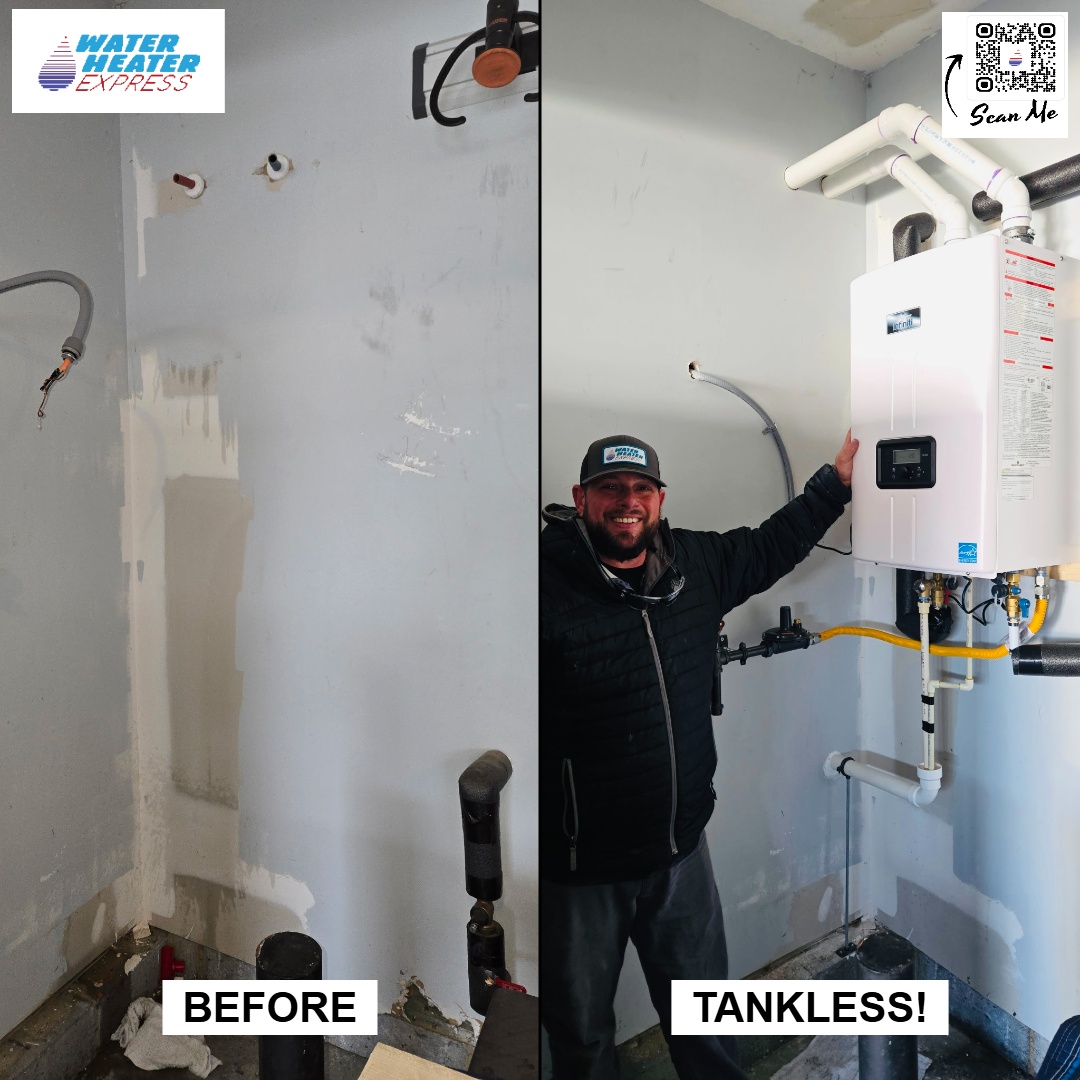
Professional Tankless Installation - Charlotte, NC
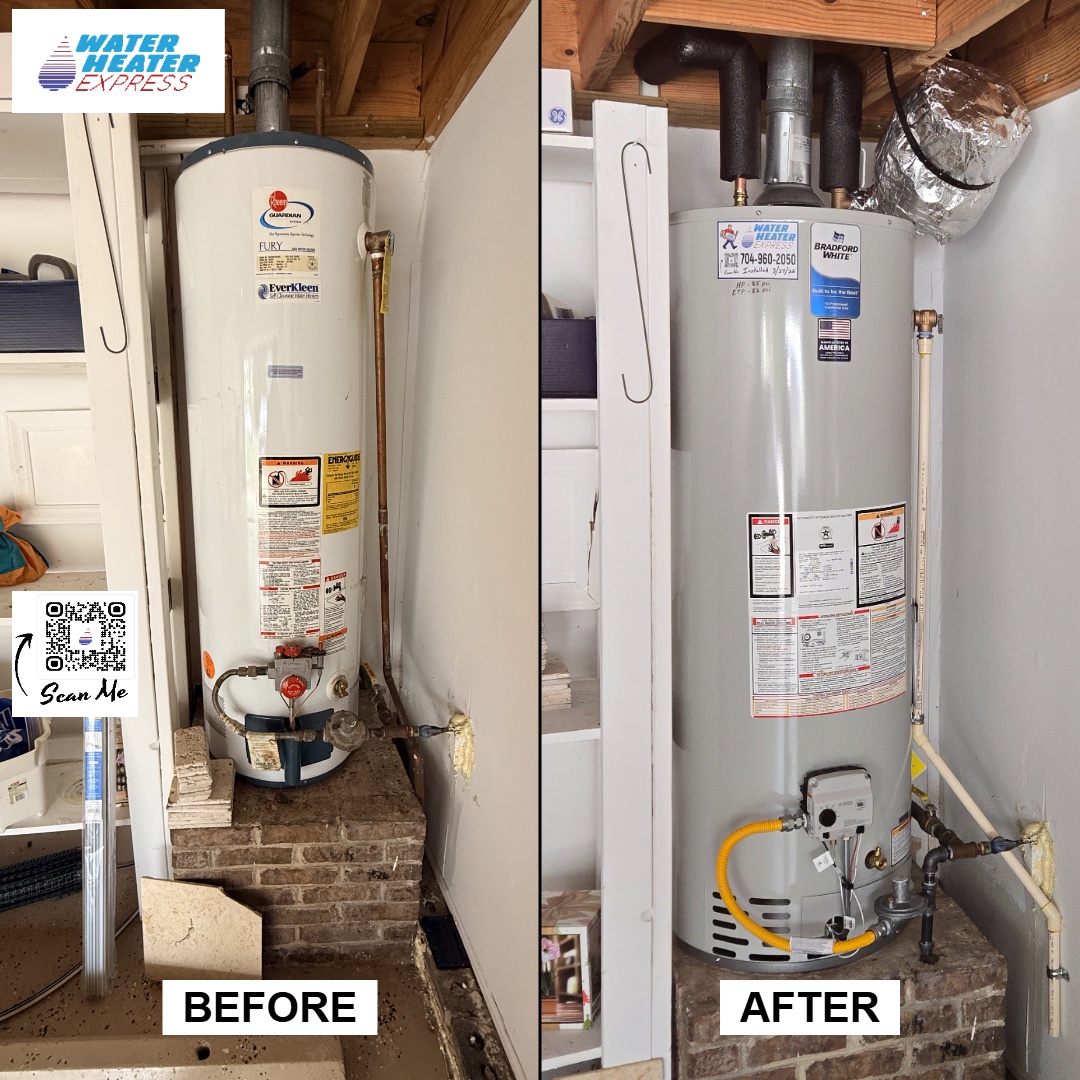
Tank Water Heater Replacement - Charlotte, NC
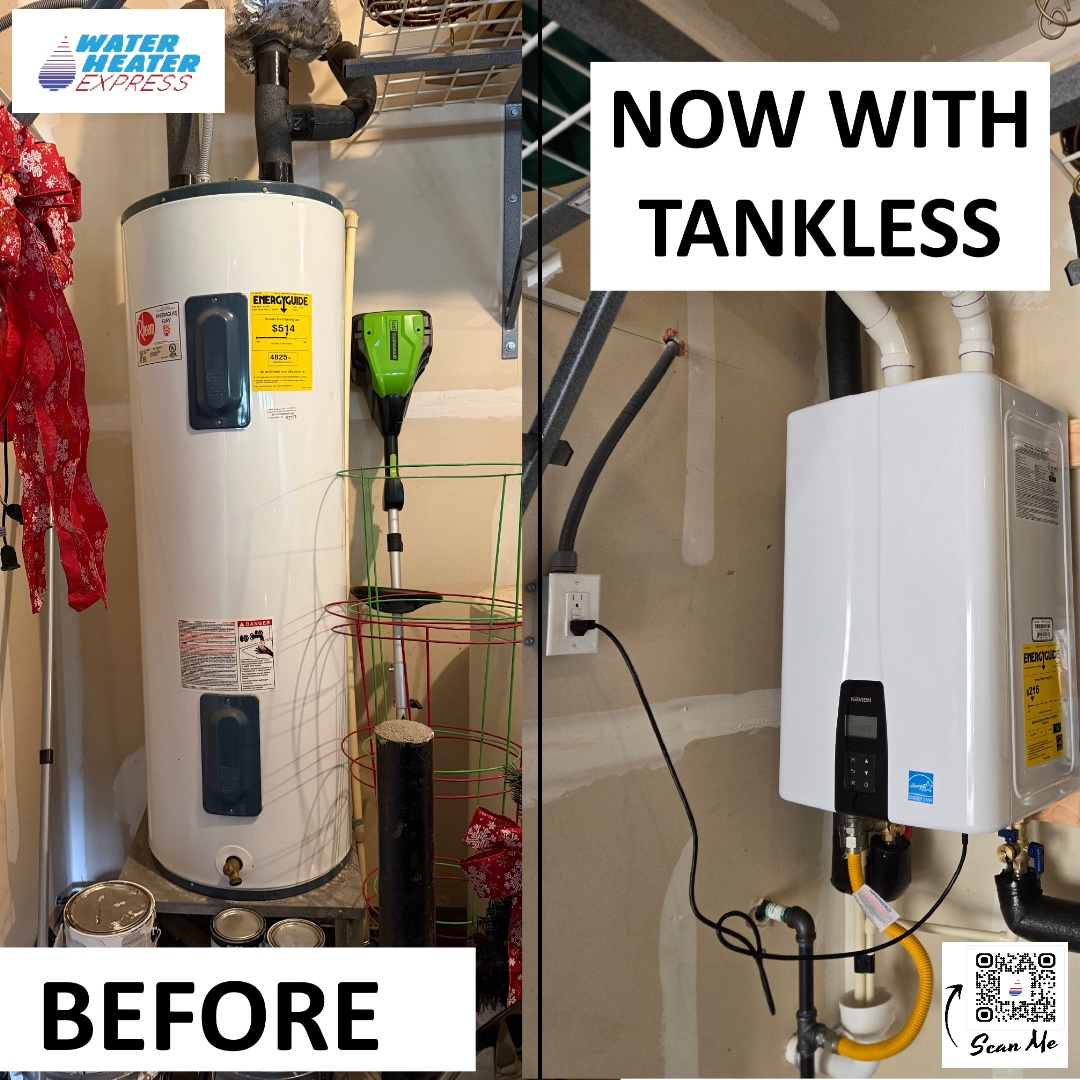
Space-Saving Tankless Upgrade - Concord, NC
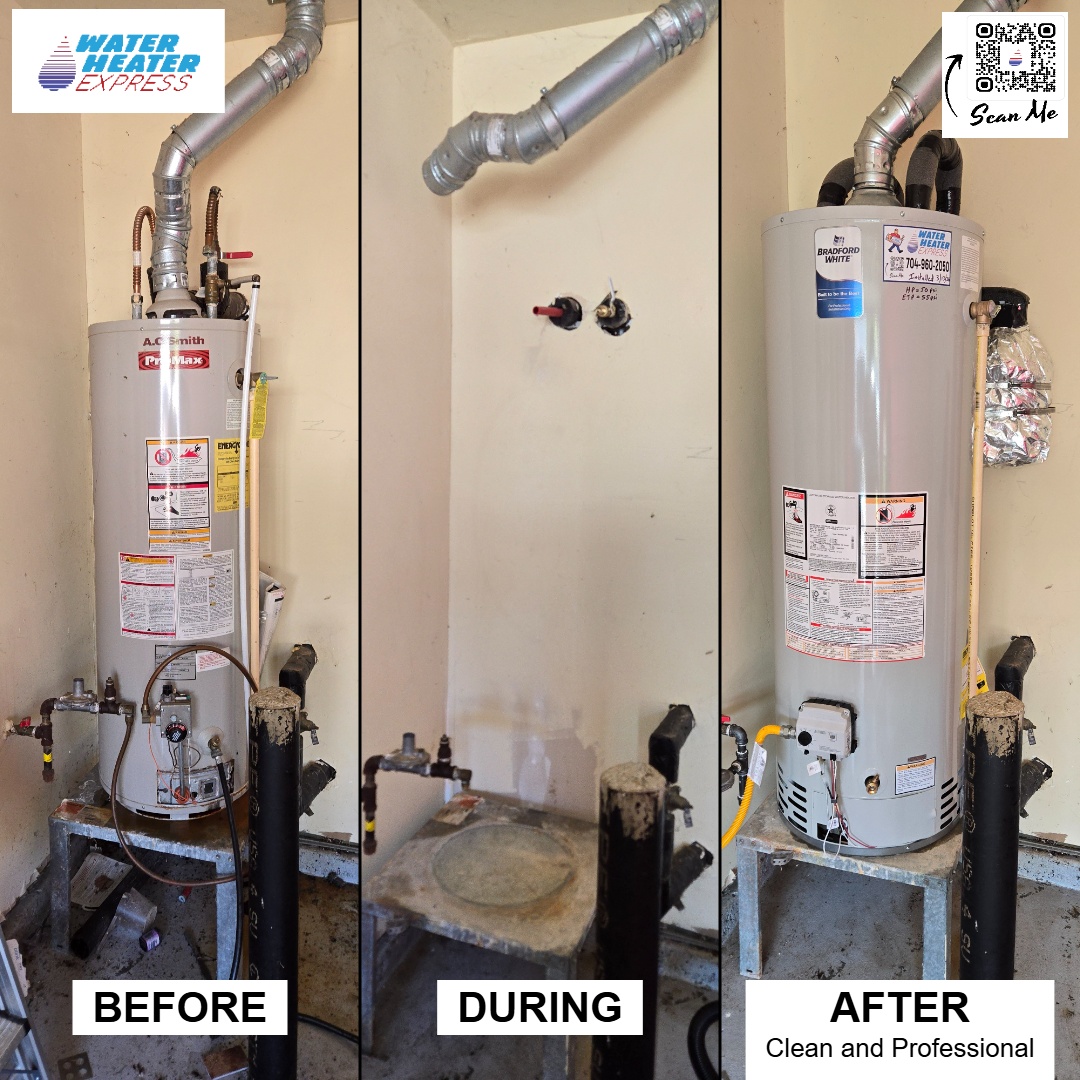
Complete Tank Replacement - Mooresville, NC
Repair or Replace? How to Decide When Your Water Heater Starts Acting Up
Sometimes replacing is the smarter investment - Charlotte, NC installation
Your water heater is acting up, and now you're weighing a repair quote against a brand-new unit. It's the question we hear most often, from Pineville, Concord, and Charlotteto everywhere in between. Fall is when it tends to come up: incoming water gets colder as the season turns, so a marginal heater has to work harder, and that's often when a borderline unit finally gives out. There's no single magic number, but four questions get you to the right answer almost every time.
1. How old is the unit? Tank water heaters typically last 8-12 years (see our post further below on how long they last in Charlotte). If yours is under 7 or 8 years old and a single part has failed, repairing it is usually the sensible call. Once a tank is past 10 years, even a good repair is buying time on a tank that is wearing out from the inside. Not sure of the age? The serial number on the label usually encodes the month and year of manufacture.
2. What exactly failed? Not every repair is equal. Some parts are quick, inexpensive fixes, while others cost a meaningful fraction of a new unit:
- Heating element or thermostat (electric): usually a straightforward, affordable repair
- Anode rod: cost depends on how accessible it is, and replacing it can extend a healthy tank's life
- Temperature and pressure relief (T&P) valve: typically a minor repair
- Gas control valve (gas units): one of the pricier repairs, and often the point where replacement starts to make sense
Compare the repair quote to the cost of a new installed unit (see our post on replacement cost). A small repair on a 5-year-old heater is an easy yes. A major repair on a 12-year-old tank is a harder sell.
3. Is the tank itself leaking?This is the one situation where the decision is made for you. A leak from a loose fitting, a drain valve, or the T&P valve is fixable. But water seeping from the body or bottom of the tank means the steel has corroded through, and no repair can fix that. The same goes for rusty or discolored water from the hot tap only: the tank has started to deteriorate from the inside. Turn off the water supply to the unit and call us.
4. How many repairs has it already needed? One repair on an otherwise healthy heater is routine. A second repair within a year is a pattern. Each fix tends to be followed by the next part failing, and the money you spend chasing problems on an aging unit is money that could have gone toward a new one with a full warranty.
A rule of thumb, not a law.You'll often hear that if a repair costs about half of a replacement and the heater is past the midpoint of its lifespan, you should replace it. It's a useful gut check, but it's an industry rule of thumb, not an official standard, so treat it as one input alongside the four questions above.
Quick decision guide.
Repair when:
- The unit is under roughly 8 years old
- The tank is dry and not leaking
- One part has failed and the quote is well below the cost of a replacement
Replace when:
- Water is coming from the tank body, or your hot water runs rusty
- The unit is 10+ years old
- It has needed a second repair in the past year
- The repair quote is approaching half the cost of a new unit
Replacing is also a chance to upgrade. A planned replacement lets you right-size the unit for your household (see our sizing guide below), consider a tankless system, and check whether a qualifying model earns a federal tax credit or utility rebate (see our post on 2026 rebates). Doing that on your schedule beats making the same decision in a hurry with a cold shower and a flooded garage.
Our honest take: We install new units every week, but we'll tell you plainly when a repair is the smarter call. If you're not sure which side of the line you're on, start with our troubleshooting FAQ, or if you're already without hot water, head to our No Hot Water emergency page.
Get an honest repair-or-replace opinion.
704-960-2050Fall Water Heater Checklist: Get Ready Before the Cold Hits
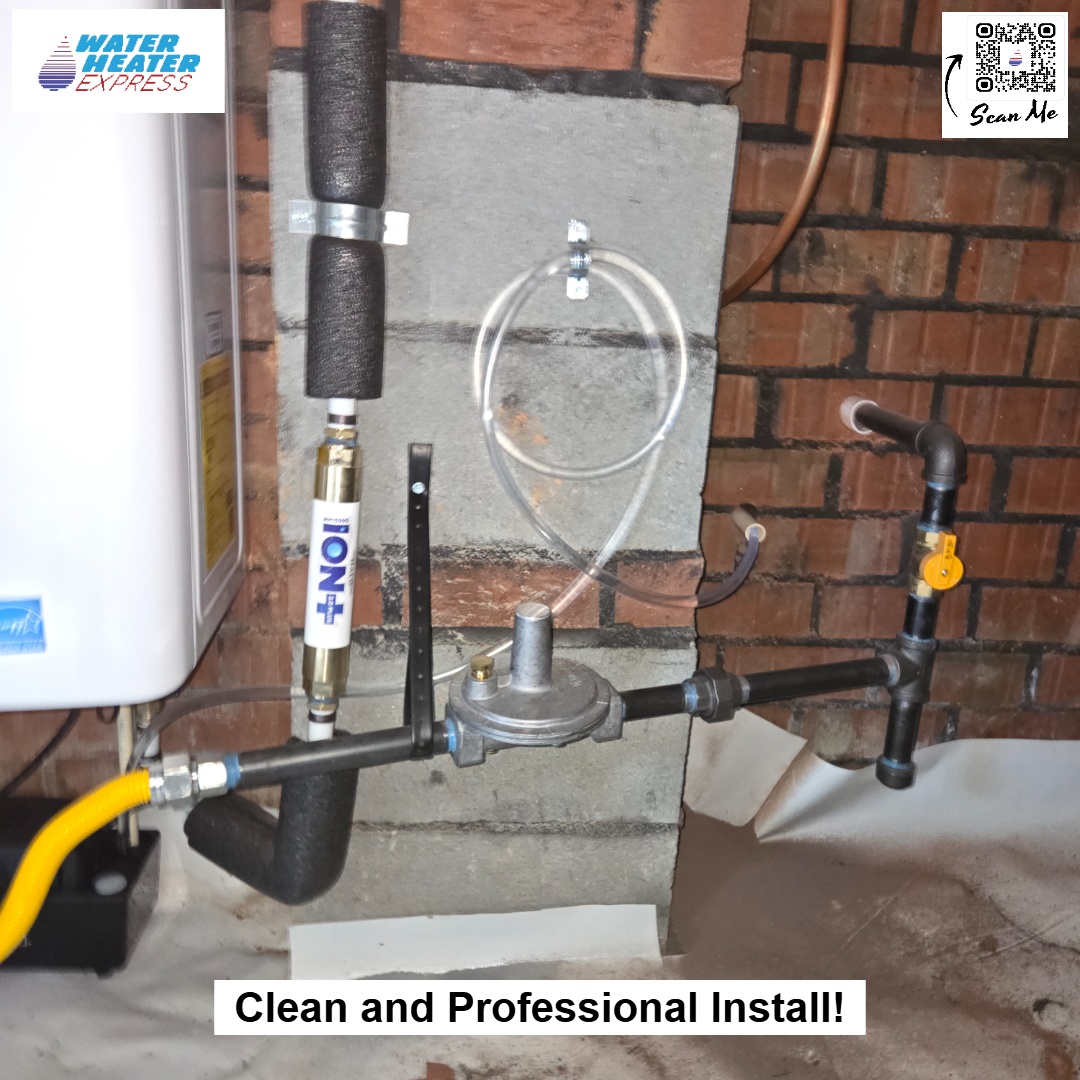
Proper connections and venting matter year-round - Matthews, NC installation
Fall is the best time to get ahead of winter water heater problems — before the first hard freeze catches you off guard. We ran through this exact checklist on a service call in Kannapolis last week, and it took less than 30 minutes. Set aside the same amount of time this month to run through it yourself.
1. Flush the tank now, not in January.A year's worth of sediment has settled at the bottom of your tank. Draining a few gallons through the drain valve before the busiest months of the year reduces strain on the heating elements or burner and helps prevent the rumbling noises that come with heavy sediment buildup.
2. Test the temperature and pressure relief (T&P) valve. Lift the small lever on the valve briefly and let it snap back — you should hear a rush of water into the discharge pipe. If nothing happens, or the valve drips continuously afterward, it needs replacing before you rely on the unit through winter.
3. Check the anode rod if your unit is 3+ years old.The anode rod sacrifices itself to corrosion so your tank doesn't have to. Once it's worn down to bare wire, your tank starts corroding instead — a common reason otherwise-healthy heaters fail early in our hard-water area.
4. Inspect insulation on any exposed pipes and the unit itself. Garages, crawlspaces, and unheated utility rooms drop fast once temperatures turn. A few dollars of foam pipe insulation now prevents frozen or burst pipes later.
5. Confirm the thermostat is set to 120°F. This is the sweet spot for safety, comfort, and efficiency — hot enough to prevent bacterial growth, not so hot that it wastes energy or risks scalding.
6. Schedule a professional tune-up if it's been more than a year. A quick inspection can catch a failing dip tube, a weakening anode rod, or early tank corrosion before it becomes an emergency call in the middle of a cold snap.
Running low on hot water already? Check our No Hot Water emergency page for immediate troubleshooting steps.
Schedule your fall tune-up before the rush.
704-960-2050Tankless Water Heater Descaling: DIY vs. Professional Service
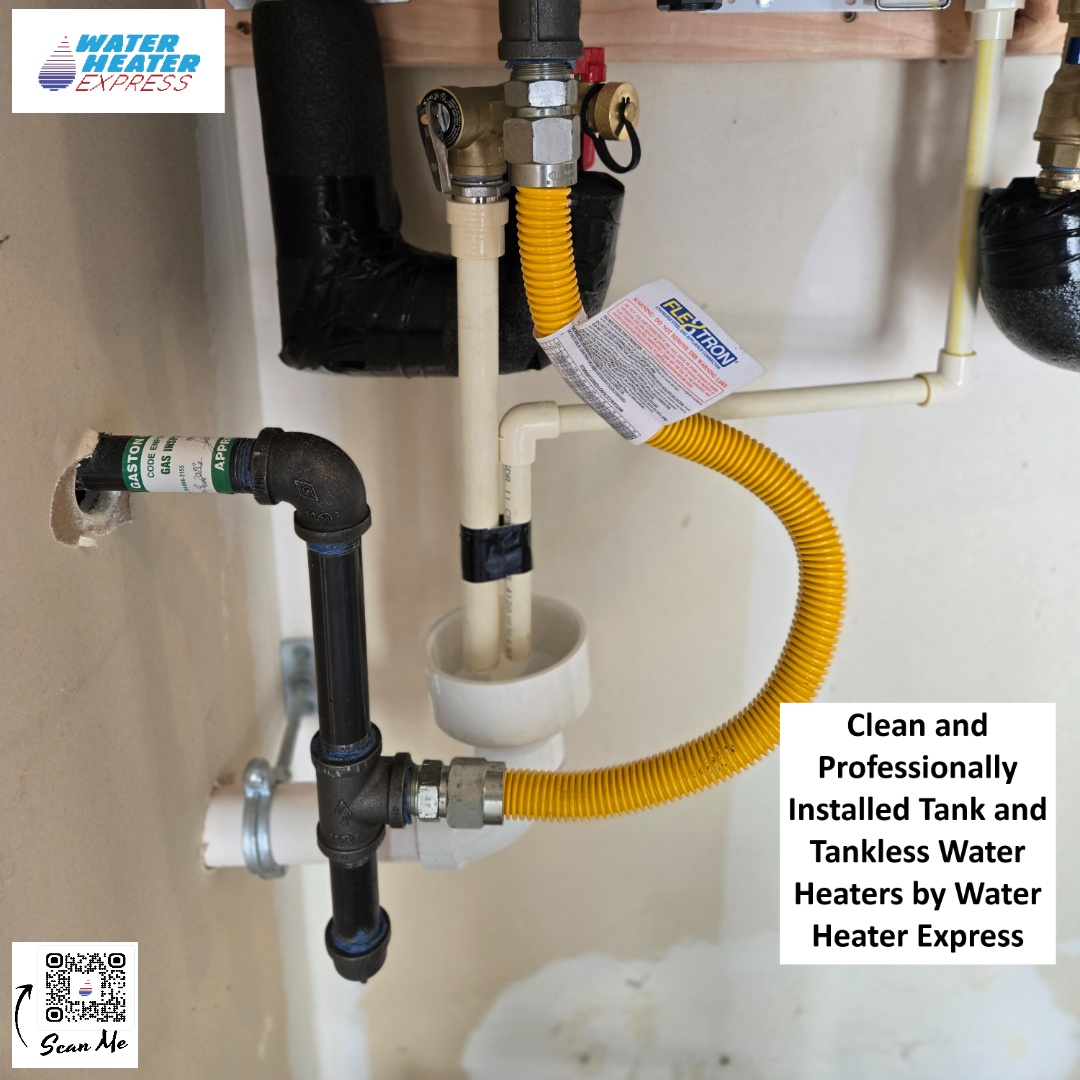
Isolation valves like these make annual descaling possible - Concord, NC installation
If you own a tankless water heater, you've probably heard that it needs to be descaled every year. We handled a descale-and-inspect visit for a tankless owner in Huntersvillejust last month, which is a good example of why we're walking through the process here — the same steps apply whether you plan to DIY it or call a professional.
Why descaling matters.Charlotte-area water carries dissolved minerals that leave scale deposits inside the heat exchanger as water is heated. Left unaddressed, scale buildup reduces efficiency, causes error codes, shortens the unit's lifespan, and — on most manufacturers' warranties — voids coverage if annual maintenance can't be documented.
The DIY approach. If your unit was installed with isolation valves (a service port kit), you can descale it yourself: close the valves, connect a submersible pump to circulate a vinegar or manufacturer-approved descaling solution through the heat exchanger for 45-60 minutes, then flush with clean water. A basic pump kit costs $80-150 and can be reused annually.
What DIY doesn't catch.A vinegar flush removes scale but won't catch a failing inlet water filter, a fan losing efficiency, incorrect gas pressure, or venting issues — all things a technician checks during a full service visit. DIY also carries real risk if isolation valves aren't installed correctly or the solution isn't fully flushed before the unit is put back into service.
When to call a professional.If your unit doesn't have isolation valves, if you're not comfortable working around gas or electrical connections, or if you simply want documented proof of maintenance for warranty purposes, a professional descale-and-inspect visit is the safer route — and it's often bundled with a broader system check.
Have questions about your specific unit? Visit our tankless water heater page or call us — we service most major brands.
Book your annual tankless service.
704-960-2050Is a Tankless Water Heater Worth It in the Charlotte Heat? Summer Efficiency Breakdown
Summer is when homeowners from Gastoniato the greater Charlotte area feel their energy bills the most — and it's also when a tank water heater is working the hardest for the least benefit. Here's how the numbers actually break down.
Standby loss doesn't take a summer break.A tank water heater keeps 40-80 gallons of water hot 24/7, whether you're home or not. In summer, that standby heat radiates into your utility room or garage — space your AC then has to work harder to cool. It's a double energy cost that most homeowners never think about.
Tankless eliminates standby loss entirely.Because a tankless unit only heats water when a hot tap is actually open, there's no tank radiating heat into your home all day. That's part of why tankless units run 20-30% more efficient than tank units on average — and why the efficiency gap can feel even more noticeable in summer.
Less strain during high-demand months. Between sprinklers, pool fills, extra laundry, and houseguests, summer water usage often spikes. A tankless system delivers hot water on demand without the recovery lag a tank experiences after several people shower back-to-back.
Do the math for your household.If your current tank unit is nearing the end of its 8-12 year lifespan, replacing it with a tankless system during a planned upgrade (rather than an emergency one) lets you factor in the full picture — installation cost, expected energy savings, and the 20+ year lifespan — instead of grabbing whatever's in stock during a no-hot-water emergency.
See our full Tank vs. Tankless comparison or get a free recommendation based on your actual household usage.
Get a free tankless recommendation.
704-960-2050Water Heater Rebates & Tax Credits Available to NC Homeowners in 2026
A new water heater can qualify for federal tax credits and, in some cases, local utility rebates — but the programs, eligible models, and paperwork change often. A homeowner in Concordrecently asked us whether their new heat pump water heater would qualify, which is a great example of why we always point people to the source rather than quoting figures that may be outdated by the time you read this. Here are the official sources to check before you buy, plus the general process for claiming what you're owed.
1. Federal tax credit (Energy Efficient Home Improvement Credit). Certain high-efficiency water heaters — including many heat pump and qualifying tankless models — can be eligible for a federal tax credit under IRS Section 25C. Check current eligibility and the credit percentage/cap directly from the source:
- ENERGY STAR: Federal Tax Credits for Water Heaters — current eligibility requirements and qualifying efficiency ratings
- IRS Form 5695: Residential Energy Credits — the form used to actually claim the credit on your tax return
2. Local utility rebates. Duke Energy periodically offers rebates on qualifying water heater upgrades for NC customers. Program availability and rebate amounts change, so confirm directly before purchasing:
- Duke Energy: Home Energy Products & Rebates — current NC residential rebate offers
3. Statewide and other incentive databases.For a full, regularly updated list of every state, utility, and federal incentive available in North Carolina — not just the big two above — the Database of State Incentives for Renewables & Efficiency is the most complete source:
- DSIRE: NC Incentives Database — searchable by state, technology, and program type
How to actually get the money:
- Confirm eligibility first. Check the model's efficiency rating (Uniform Energy Factor) against the current requirement on ENERGY STAR's page before you buy — not every efficient-looking unit qualifies.
- Keep every document. Save your itemized invoice, the model/serial number, and the Manufacturer's Certification Statement (we provide this with every qualifying installation).
- File the federal credit with your taxes. Form 5695 is filed with your regular tax return for the year the unit was installed — not the year you ordered it.
- Apply for utility rebates separately, and check timing. Some utility rebates require pre-approval or an application submitted within a set window after installation — check Duke Energy's current program rules before scheduling your installation.
Since program details change, we recommend confirming current numbers directly on the sites above before you buy. Our team can tell you which units we install currently qualify.
Ask which qualifying units we install.
704-960-2050How to Extend the Life of Your Water Heater: A Homeowner's Maintenance Calendar
Regular maintenance is what separates an 8-year heater from a 15-year one - Mooresville, NC
We touched on why Charlotte's water quality shortens water heater lifespan in a previous post. Here's the actual maintenance calendar our technicians follow on service calls across the greater Charlotte area, broken down by how often each task needs doing.
Monthly (2 minutes):
- Do a quick visual check around the base of the unit for any moisture, rust streaks, or puddling
- Listen for new rumbling, popping, or ticking sounds that weren't there before
Every 3 months (10 minutes):
- Test the temperature and pressure relief (T&P) valve by lifting the lever briefly
- Confirm the thermostat is still set to 120°F — settings can drift or get bumped accidentally
Annually (30-60 minutes, or schedule a professional visit):
- Flush 2-3 gallons of sediment from tank units through the drain valve
- Inspect the anode rod on tank units and replace if worn to bare wire (typically every 3-5 years)
- Descale tankless units by circulating a manufacturer-approved solution through the heat exchanger
- Check venting, gas lines, and electrical connections for wear or corrosion
Every 8-12 years (tank) or 15-20 years (tankless):
- Start budgeting for replacement before you're forced into an emergency decision — see our post further below on how long water heaters actually last in Charlotte
Sticking to this calendar is genuinely the difference between a water heater that limps to 8 years and one that comfortably reaches 15. If any of these tasks feel outside your comfort zone — especially anode rod replacement or descaling — we're happy to handle the whole calendar for you.
Ask about our annual maintenance visits.
704-960-20507 Warning Signs Your Water Heater Is About to Fail
Nobody wants to wake up to a cold shower or, worse, a flooded garage. A homeowner in Salisbury recently mentioned hearing a faint popping sound for weeks before finally calling us — a good reminder that water heaters rarely fail without warning. If you know what to look for, you can often catch problems early and avoid an emergency replacement.
1. Age matters more than you think. Tank water heaters typically last 8-12 years. If yours is approaching that range, start planning ahead. Check the serial number on the label — the first four digits usually indicate the month and year of manufacture.
2. Rusty or discolored hot wateris a telltale sign that the tank is corroding from the inside. Once rust appears in your hot water (but not your cold), the tank has already begun to deteriorate. This can't be reversed.
3. Strange rumbling or popping noises come from sediment buildup at the bottom of the tank. As water heats, it percolates through this sediment layer, creating noise. The thicker the sediment, the harder your heater works, and the sooner it will fail.
4. Water pooling around the baseof the unit is never a good sign. Small leaks often indicate a failing tank. Don't ignore even minor moisture — a small leak can become a major flood quickly.
5. Hot water runs out faster than it used to.If showers that once stayed hot are now running cold halfway through, the heating elements may be failing, or sediment is reducing your tank's effective capacity.
6. Your energy bills have increased without explanation. An aging water heater has to work harder to produce the same amount of hot water, which shows up on your utility bills.
7. Multiple repairs in a short period.If you've had to call for service more than once in the past year, it's often more economical to replace the unit than to keep fixing it.
For more troubleshooting help, check out our detailed FAQ troubleshooting section.
Need emergency water heater service in Charlotte?
704-960-2050How Much Does a Water Heater Replacement Cost in Charlotte in 2026?
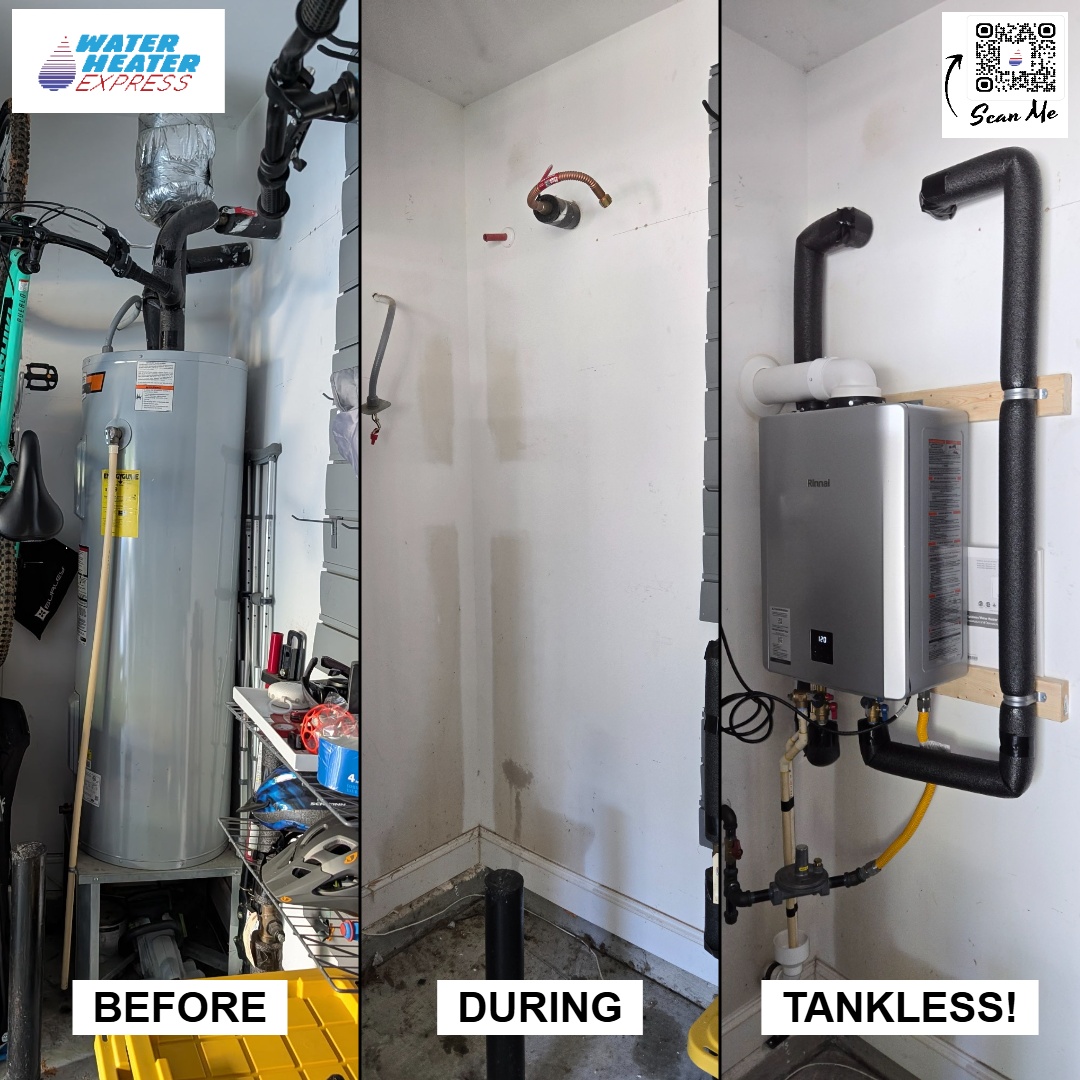
Recent tankless installation in Charlotte - Before, During, and After
One of the most common questions we hear is "How much should I expect to pay for a new water heater?" The answer depends on the type of unit, but here's what homeowners from Indian Trail to the greater Charlotte area are actually paying in 2026.
Tank water heater replacement
Pricing includes the water heater itself, all necessary fittings and connections, labor, removal and recycling of your old unit, and sales tax. The price varies based on tank size (40, 50, or 75 gallon), fuel type (gas or electric), installation location, and whether any code upgrades are required.
Tankless water heater installation
Tankless systems cost more upfront but last 20+ years compared to 8-12 for tank units. The installation may also require gas line upgrades or new venting, which can add to the cost but is always included in our quotes.
What should be included in a water heater quote?A legitimate quote should cover everything: the unit, parts, labor, permits, removal of the old heater, and tax. If a contractor gives you a price and then adds fees later, that's a red flag.
Why do prices vary so much between contractors? Some companies quote just the water heater and add labor, parts, and fees separately. Others use bait-and-switch tactics with artificially low prices. We believe in transparent, all-inclusive pricing — the number we quote is the number you pay.
For more details on what's included in our installations, see our FAQ on replacement and installation.
Same-day water heater replacement available.
704-960-2050Tank vs Tankless Water Heater: Which One Should You Choose in NC?
The tank vs. tankless debate comes up in almost every water heater conversation we have with homeowners — like a retired couple we worked with recently in Mooresville. Both technologies have genuine advantages, and the right choice depends on your household's specific situation.
How tank water heaters work: A tank water heater stores 40-80 gallons of water and keeps it heated 24/7, ready for use. When you turn on the hot tap, preheated water flows from the tank while fresh cold water enters to be heated. Simple, proven technology that has worked for over a century.
How tankless water heaters work: A tankless unit heats water on demand as it flows through the system. When you turn on a hot water tap, a sensor detects the flow and ignites the burner, heating water as it passes through the heat exchanger. Water is only heated when needed — no standby energy loss.
The case for tank water heaters:Lower upfront cost ($1,295-$1,995 installed), simpler installation, familiar technology, and they work well for most households. If your current tank heater has served you well and you don't need unlimited hot water, a tank replacement is often the practical choice.
The case for tankless: Energy savings of 20-30%, unlimited hot water (no running out mid-shower), 20+ year lifespan, and they free up significant floor space. For larger families, homes with high hot water demand, or homeowners who plan to stay long-term, the higher upfront investment often pays off.
Our honest take:We install both and recommend what makes sense for each home. Tankless isn't always the answer — for a small household with moderate hot water use, a quality tank heater may be the smarter investment.
Explore the full comparison in our Tank vs. Tankless FAQ section, or visit our tankless water heater page for more details.
Call Water Heater Express for a free recommendation.
704-960-2050Why You Have No Hot Water (And What to Do Right Now)
You turn on the shower and... nothing but cold water. It's one of the most common calls we get, from Kannapolis to just about every neighborhood in between. Before you panic (or call a plumber), there are several things you can check yourself that may solve the problem in minutes.
If you have an electric water heater:Start at your electrical panel. Look for the breaker labeled "Water Heater" — it's usually a double-breaker that takes up two slots. If it's tripped (in the middle position), flip it fully OFF, wait 10 seconds, then flip it back ON. If the breaker trips again immediately, stop — you have an electrical issue that needs professional attention.
Next, check the reset button on the water heater itself. Remove the upper access panel and look for a red button behind the insulation. Press it firmly until it clicks. This "high-temperature cutoff" trips when the water gets too hot and won't reset automatically.
If you have a gas water heater: First, check for a gas smell. If you smell rotten eggs or sulfur, leave the house immediately and call your gas company. Do not flip any switches or light anything.
If there's no gas smell, look through the small window at the bottom of the tank for the pilot light — a small blue flame. If it's out, you'll need to relight it following the instructions on your unit. Turn the gas control to "Pilot," hold down the pilot button, and use the igniter until the flame appears. Hold the button for 60 seconds, then switch to "On."
When to call a professional:If the pilot won't stay lit, the breaker keeps tripping, or you've tried these steps and still have no hot water, it's time to call. We offer free phone troubleshooting and can often diagnose the problem without a service visit.
For detailed step-by-step instructions, see our comprehensive troubleshooting FAQ or visit our No Hot Water emergency page.
24/7 Emergency Service available.
704-960-2050Winter Water Heater Maintenance Tips for North Carolina Homes
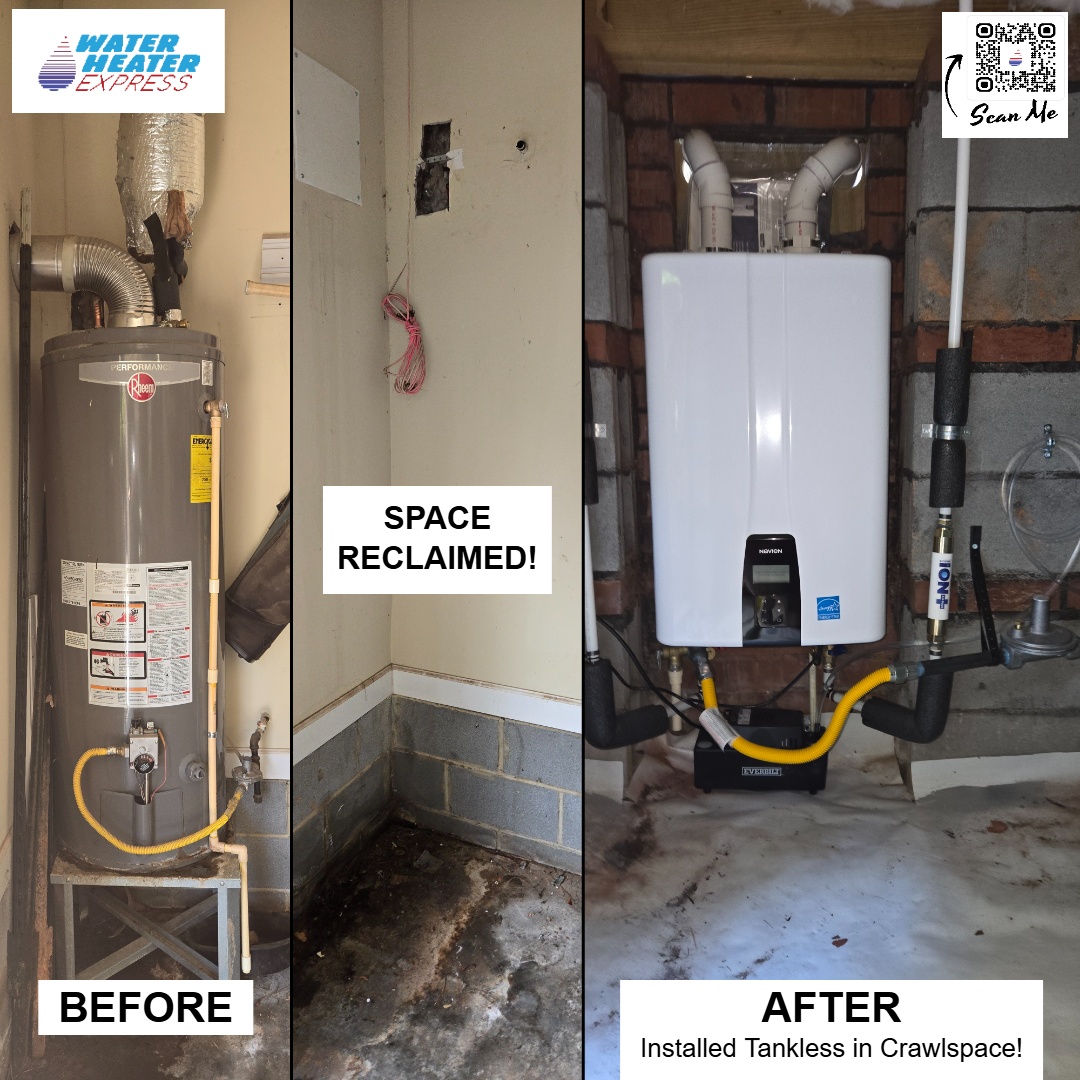
Crawlspace tankless installation in Matthews - Properly protected from winter temperatures
North Carolina winters can be unpredictable. One week it's 60 degrees, the next we're dealing with a hard freeze — a Huntersvillehomeowner learned that the hard way last winter after a burst pipe in their crawlspace. Your water heater — especially if it's in a garage, crawlspace, or utility room — needs some attention before cold weather hits.
Insulate exposed pipes. Any hot water pipes running through unheated spaces should be wrapped with foam pipe insulation. This prevents freezing and also reduces heat loss, which means hotter water at the tap and lower energy bills. A $20 investment in pipe insulation can prevent thousands in freeze damage.
Check the temperature setting. Your water heater should be set to 120 degrees Fahrenheit. This is hot enough to prevent bacterial growth and provide comfortable hot water, but not so hot that it wastes energy or creates scalding risk. In winter, some homeowners bump this up slightly, but 120-125 is the sweet spot.
Drain sediment from tank water heaters. Sediment buildup is the number one cause of water heater problems in the Charlotte area. Attach a garden hose to the drain valve at the bottom of the tank and drain 2-3 gallons (or until the water runs clear). Do this annually — more often if you have hard water.
Inspect the area around the heater. Make sure nothing flammable is stored near a gas water heater. Check that the venting is secure and unobstructed. Look for any signs of moisture, rust, or corrosion on the tank.
Consider a water heater blanket.If your water heater is in a cold space and doesn't already have good insulation (most newer units do), an insulating blanket can reduce standby heat loss by 25-45%.
Call for professional maintenance.
704-960-2050How Long Do Water Heaters Last in Charlotte? (Real Local Data)
The national average lifespan for a tank water heater is 8-12 years. But averages don't tell the whole story — we saw a textbook example of this on a recent call in Gastonia, where local factors like water quality, installation quality, and maintenance habits made a significant difference.
Charlotte's water quality matters.The Charlotte-Mecklenburg area has moderately hard water, which accelerates sediment buildup and anode rod corrosion. We regularly replace water heaters that are only 6-8 years old because sediment has never been flushed from the tank. On the flip side, we've seen well-maintained units last 15+ years.
Tank water heaters: 8-12 years typical. Electric units tend to last slightly longer than gas because they have fewer components that can fail. However, both types are subject to the same tank corrosion issues over time.
Tankless water heaters: 20+ years.Because there's no tank to corrode, tankless units last significantly longer. The heat exchanger is the most critical component, and with annual descaling, it can last decades. Many manufacturers offer 15-year warranties on the heat exchanger.
What shortens water heater life:Neglecting maintenance (especially sediment flushing), setting the temperature too high, poor water quality, and low-quality installation. A water heater that's slightly undersized for the household also works harder and wears out faster.
What extends water heater life: Annual sediment flushing, replacing the anode rod every 3-5 years, maintaining proper temperature settings, and ensuring adequate ventilation for gas units.
Learn more in our FAQ section on replacement.
Schedule your water heater inspection today.
704-960-2050The Pros and Cons of Tankless Water Heaters in 2025
Tankless water heaters have become increasingly popular, and for good reason — we've installed quite a few in older Concordhomes specifically to free up cramped utility closets. But they're not the right choice for every home. Here's an honest look at the advantages and disadvantages.
Advantages of tankless:
- Unlimited hot water — No tank to empty means you'll never run out mid-shower
- Energy savings of 20-30% — Water is only heated when needed, eliminating standby loss
- Longer lifespan (20+ years) — Nearly double that of tank water heaters
- Space savings — Wall-mounted units free up valuable floor space
- Lower risk of water damage — No 40-80 gallons of water to leak if something fails
Disadvantages of tankless:
- Higher upfront cost — Installation typically runs $3,495+, compared to $1,295-$1,995 for tank units
- May require infrastructure upgrades — Gas line sizing, electrical requirements, or venting modifications
- Annual maintenance required — Must be descaled yearly to maintain warranty and efficiency
- Cold water sandwich effect �� Brief burst of cold water between uses on some units
- No hot water during power outages — Even gas tankless units need electricity to operate
Who should consider tankless? Larger families who run out of hot water, homeowners planning to stay long-term (to recoup the investment), anyone wanting to reclaim garage or utility room space, and environmentally-conscious homeowners looking to reduce energy use.
Visit our tankless water heater page for more information, or see our Tank vs. Tankless FAQ.
Thinking about tankless?
704-960-2050What Size Water Heater Do I Need? (Complete Guide)
Choosing the wrong size water heater is one of the most common mistakes homeowners make — we recently walked through this exact question with a family of five in the greater Charlotte area. Too small, and you'll run out of hot water constantly. Too large, and you're wasting energy heating water you'll never use.
For tank water heaters, sizing is based on capacity (gallons):
- 1-2 people: 30-40 gallon tank
- 3-4 people: 40-50 gallon tank
- 5+ people: 50-80 gallon tank
But household size is just a starting point. You also need to consider usage patterns. Do multiple people shower in the morning? Do you have a large soaker tub or jetted tub? Do you run the dishwasher and washing machine while someone is showering? Heavy simultaneous use requires a larger tank or a tankless system.
For tankless water heaters, sizing is based on flow rate (GPM):
Unlike tanks, tankless units are sized by how much hot water they can produce per minute, measured in gallons per minute (GPM). A typical shower uses 2-2.5 GPM. A kitchen faucet uses about 1.5 GPM. Running both simultaneously requires a unit that can handle 3.5-4 GPM.
The other factor is temperature rise — how much the unit needs to heat incoming water. In North Carolina, incoming water is typically 55-60°F in winter. To reach 120°F, you need a 60-65 degree temperature rise. Higher temperature rise requirements reduce the unit's effective flow rate.
Our recommendation:Don't guess. Call us at 704-960-2050 for a free sizing consultation. We'll ask about your household size, usage patterns, and hot water needs to recommend the exact right size — and we won't try to upsell you on a bigger unit than you need.
More details in our FAQ on sizing and installation.
Free sizing consultation available.
704-960-2050Need Water Heater Service?
Same-day service available throughout Charlotte and surrounding areas. Call now for free phone troubleshooting or to schedule your installation.